Craft as Method, Not Surface
In the current construction economy, architects often inherit a predetermined palette of industrially produced materials. Market logic dictates availability, convenience, and replication.
But architecture is not neutral and architects cannot be bystanders.
Each design decision has economic, cultural, and ecological consequences. If we continue to rely solely on manufactured finishes, we reinforce an extractive supply chain and diminish the living knowledge systems that enrich our built environment.
Craft does not simply add texture or ornament; it redefines the means of making. It slows down construction, demands skill, creates local employment, and repositions the architect not as a selector of products but as a collaborator, facilitator, and catalyst.
To integrate craft into the architecture of a home is to embed meaning at every scale, from the brick to the window, from the floor to the ceiling. It is to anchor architecture back into the realities of labour, time, knowledge, and community.
This manifesto is an argument for reclaiming craft as architecture, and for viewing the home, particularly the high-value home as a site where patronage can be reimagined as socio-cultural responsibility.
The 100,000 Brick House: Craft as Base-Build
At LAB, the 100,000 Brick House became a test case for what it means to integrate craft not as decoration, but as structure, surface, and storytelling. Instead of relying on manufactured materials, the project became an ecosystem of craft collaborations, each one embedded in the base build. Across four years, the project supported at least seven distinct artisan communities : brick masons, stone inlayers, cement-tile makers, ceramic glaze artists, stained-glass makers, timber craftsmen, and mural painters.
Craft #1 Handmade Brick, Ludhiana/ Delhi
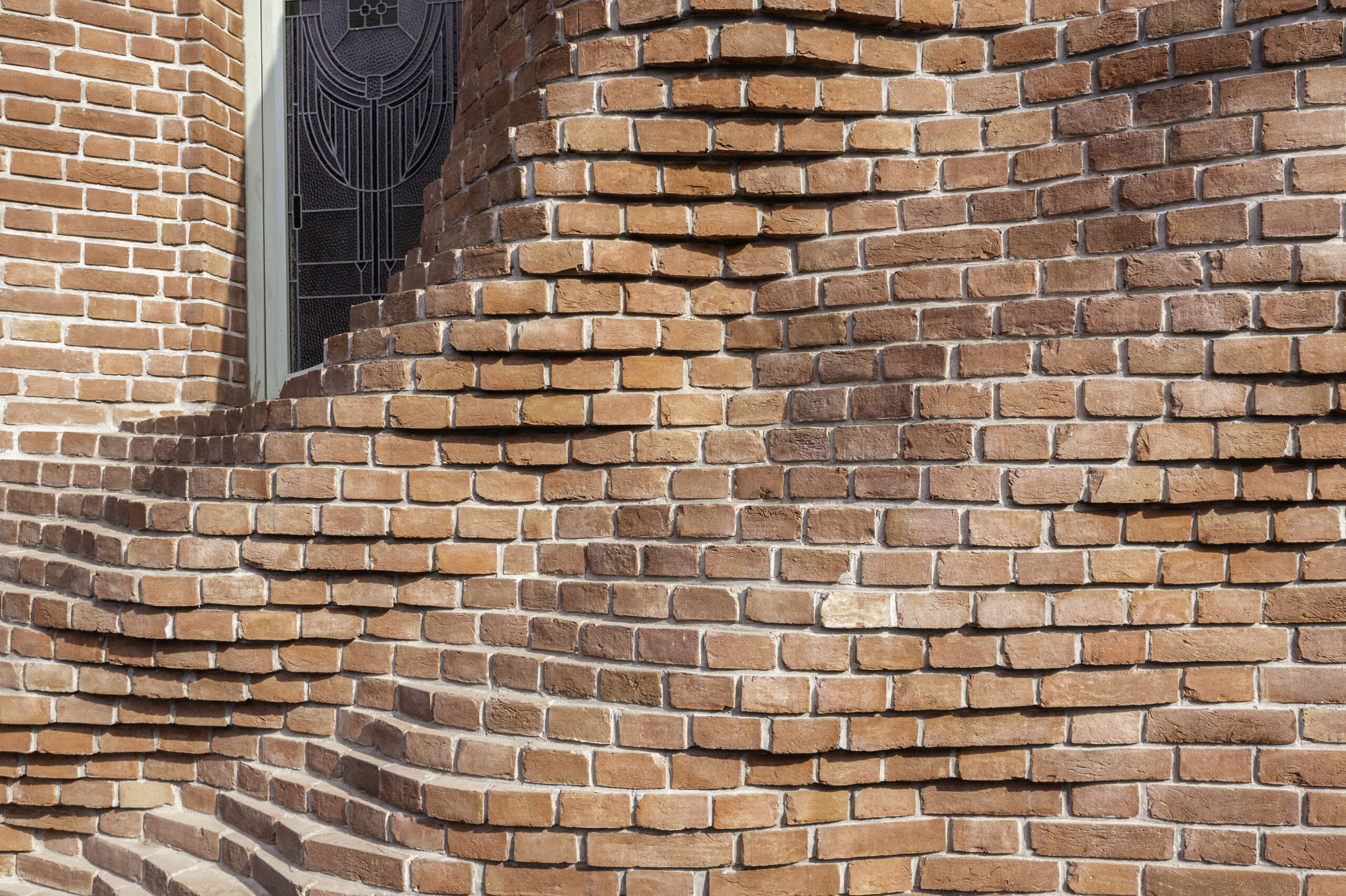
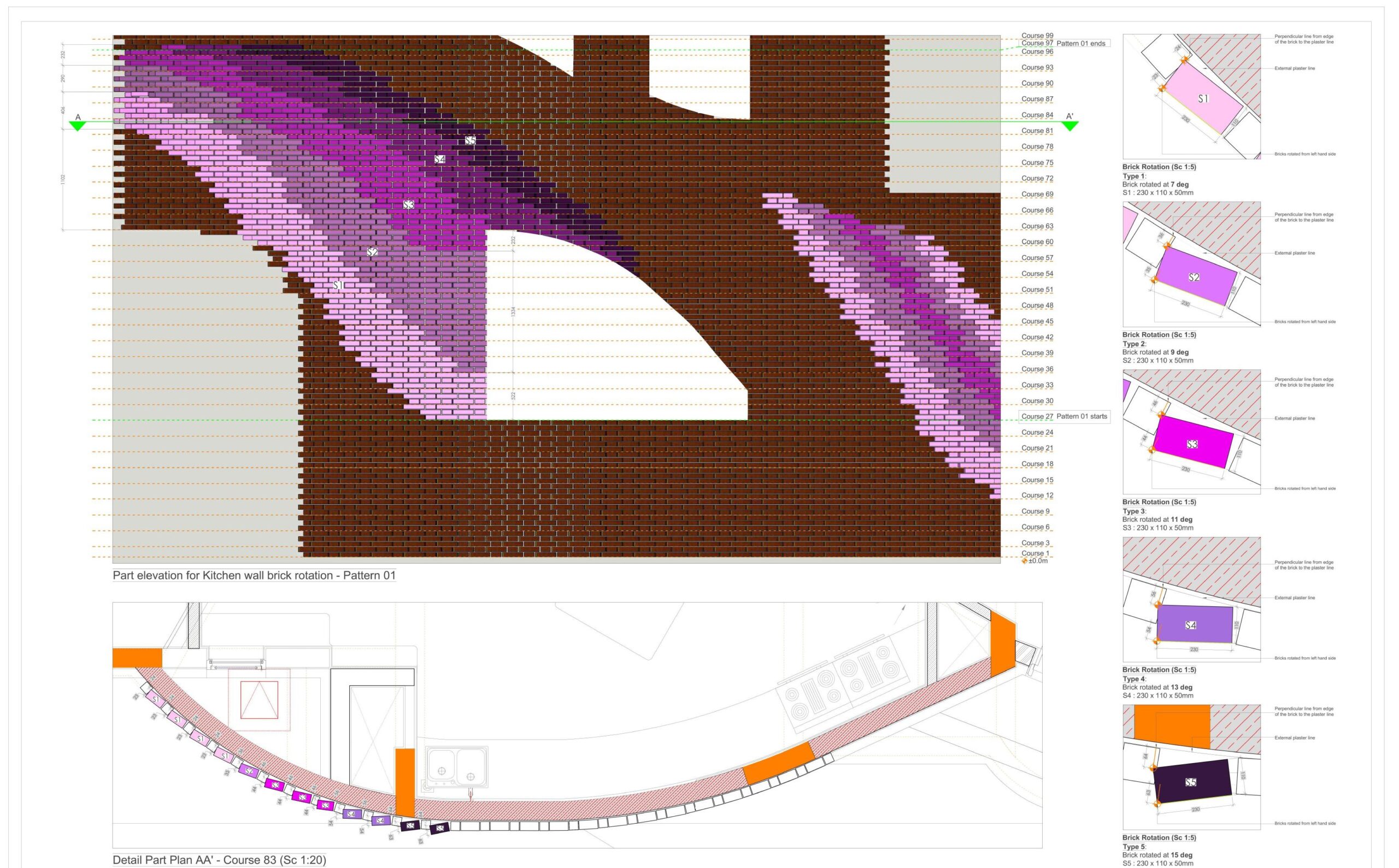
The sculptural brick envelope of the house was constructed using bricks handmade in Ludhiana. Middle-aged brick masons – many second or third-generation, executed the meticulously prepared drawings. The brick skin itself became a site of extraordinary skill transmission
Craft #2 Hand poured Cement Tiles, Bikaner
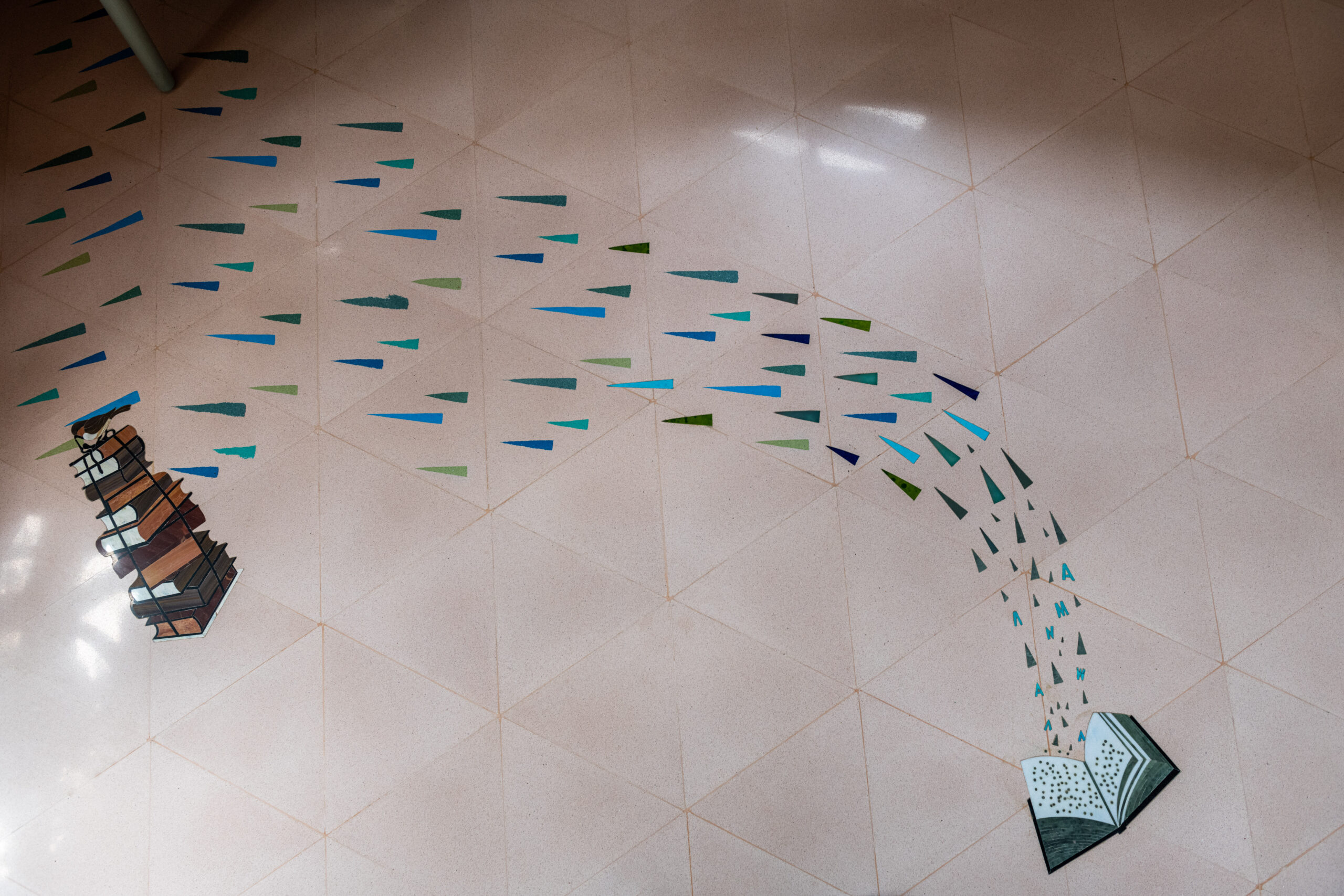
The entire cement-tile floor was poured by hand in Bikaner, using metal moulds, molesto and intricate stencils; each tile was individually cast. Variations in pigment, pour sequence, and stencil configurations produced a family of tile typologies, a modular narrative spread across rooms. Approximately xxx tiles were poured by hand for this project. A 3rd generation craft enterprise was supported for xxx months.
Craft #3 Stained Glass, Mumbai
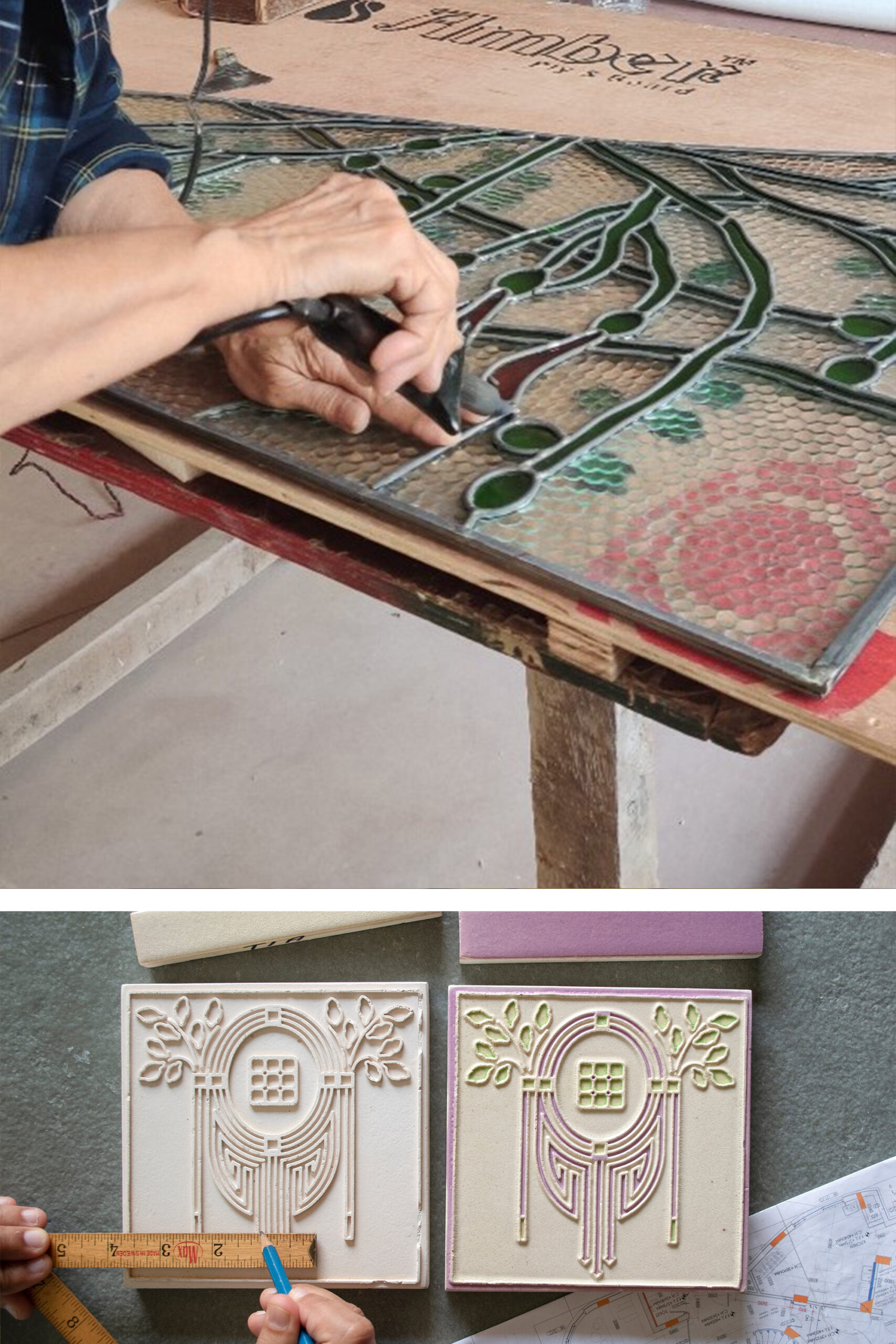
In Bombay, Cyrus and Jaishree crafted stained glass panels over two years. Their studio collected old glass, hand-cut patterns at 1:1 scale, soldered each joint, and assembled compositions that filtered light into colour. These were not decorative inserts but chromatic thresholds that changed the quality of space throughout the day. The time embedded in each panel – the labour, the slowness became part of the architecture’s atmosphere. Approximately xxx sq ft of stained glass was created for this project.
Craft #4 Stone Inlay, Agra
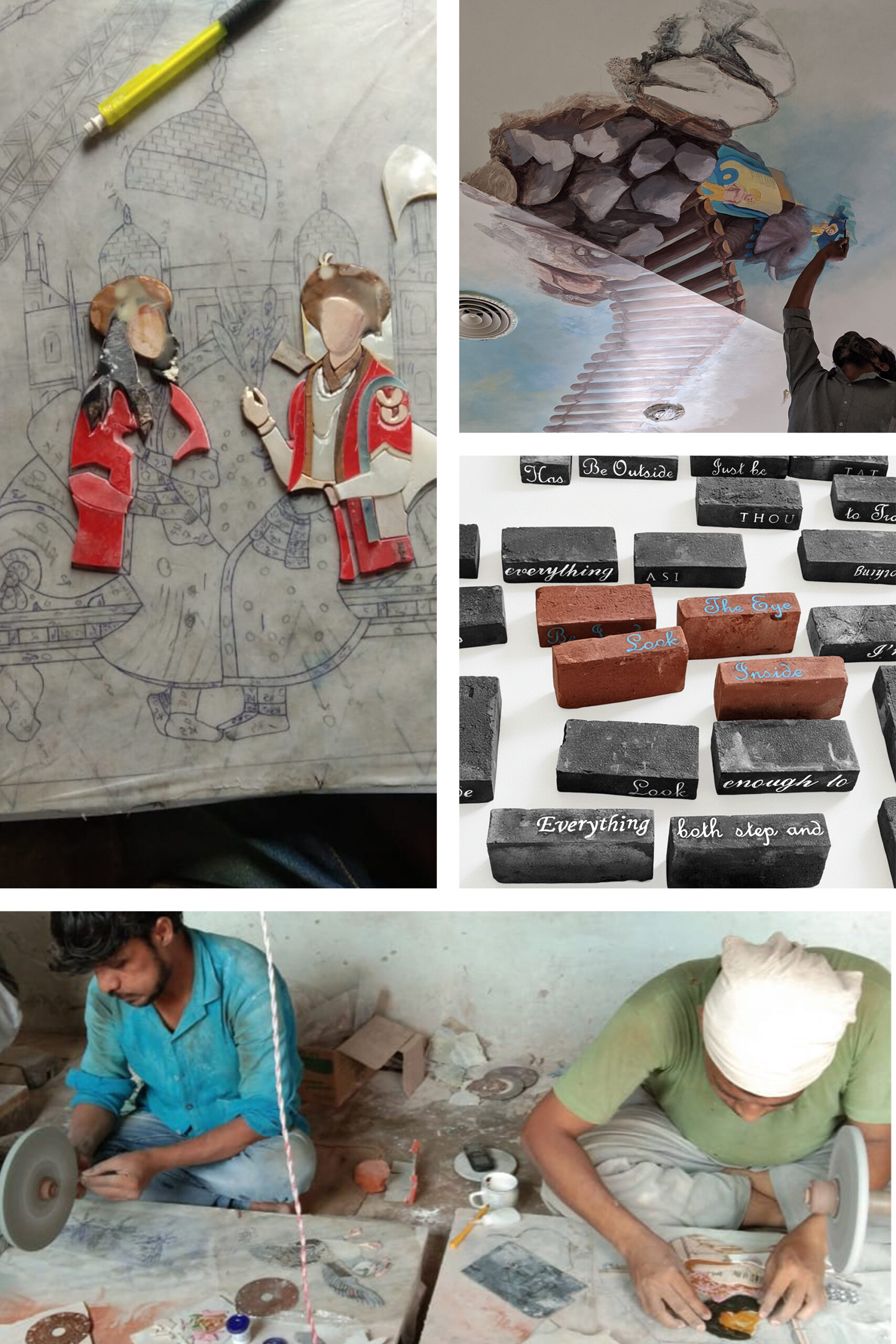
Stone inlayers from Agra trained in techniques that trace back to Mughal workshops, created a series of intricate floor inlay panels that were integrated into the cement tile floors. Over xx inlay motifs were created. Each motif required hand-cut stone, fitting, polishing, and setting, often taking several days per piece. This work, spanning nearly three years, sustained a family of inlayers and their apprentices.
Craft #5 Timber Work
Bespoke timber detailing windows and doors, was executed by teams of carpenters whose craftsmanship allowed for precision joints, hand-planed surfaces, and complex geometries.
Craft #6 Mural Painting – Hand-Painted Walls & Ceilings
Hand-painted ceiling murals and wall frescoes replaced digital wallpapers, bringing back a representational craft that once defined domestic architecture across India.
Craft #7 Ceramic Glaze Tiles, Studio Ceramists
Specially glazed ceramic tiles were produced in small batches through traditional firing cycles, supporting studio-based ceramists rather than mass manufacturers.